Listen to This Episode
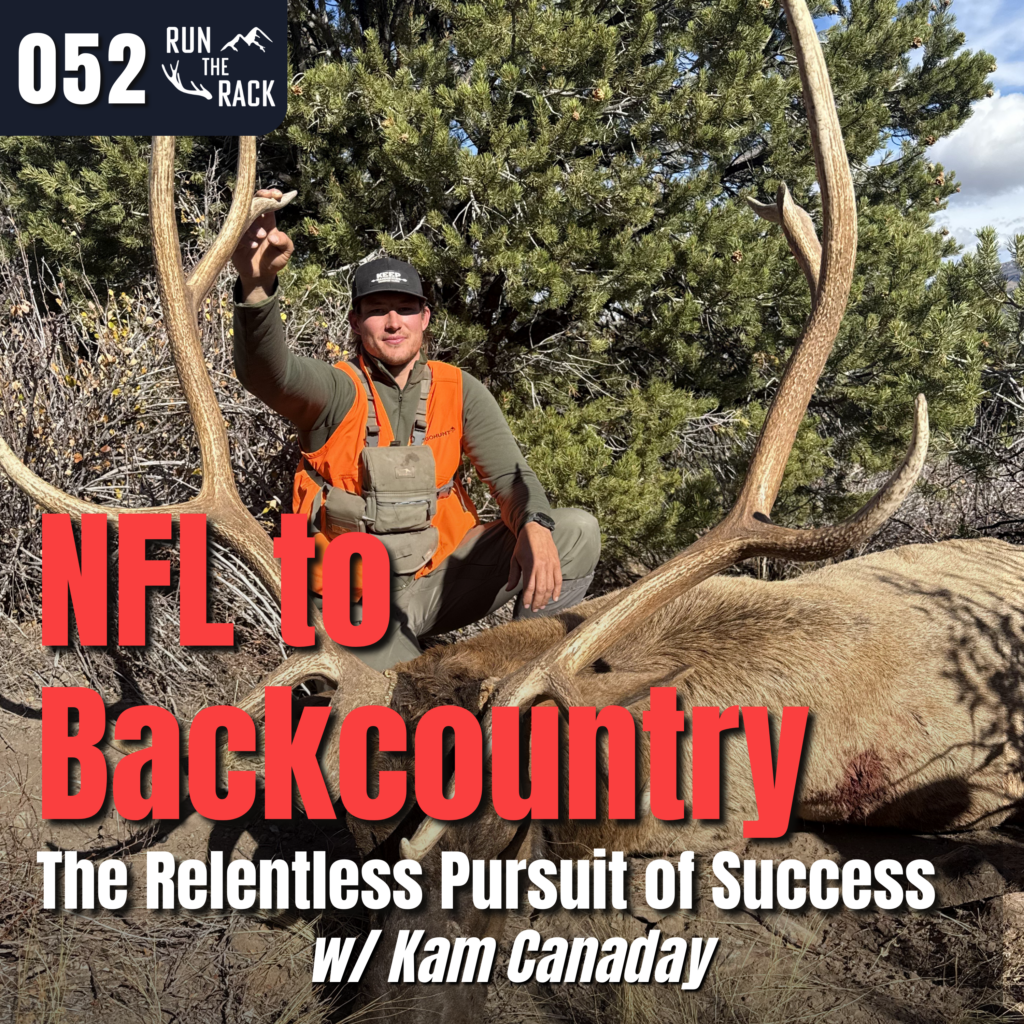
Kam Canaday—former NFL long snapper and backcountry hunter— joins this week to sit down with host Weston Homa.
Most hunters never realize how the mental toughness and precision learned in the NFL can completely transform your backcountry adventures.
Kam reveals how the pressure and the right mindset from professional football applies directly to chasing big game in the mountains.
In this episode, Cam shares the lessons learned from years in the NFL, and how those skills sharpen his focus, patience, and execution in the backcountry.
Chapters:
- 0:00 – From the NFL to Backcountry Hunting: Kam Canaday’s Journey
- 1:01 – Living the Dream: Faith, Family, and the Hunt
- 2:27 – Choosing Life: Focus on Purpose Over Career
- 4:27 – Staying True to Self: Podcasting, Brand, and Authenticity
- 5:34 – Idaho Bound: A Westward Move and New Chapter
- 9:21 – Mountain Life: The Excitement of Shed Hunting
- 13:47 – The Steelers Locker Room: Mindset, Training, Execution
- 15:04 – Solo Backcountry: 16 Days of Hunting and a Cat Encounter
- 22:12 – The Yips and the Mental Game: Archery and Football
- 32:37 – Manifestation and Future Hunts: Planning and Training
Partners:
Oryx Outdoors – Fitness apparel for those who are driven to push boundaries—whether that means improving their gains at the gym or filling their freezers. Use code WESTON for 10% off your next order! – https://tinyurl.com/yeay296d
Takeaways:
- High-stakes minor actions define mastery
Mastery in any performance sport or craft hinges on relentless attention to small, critical details that you execute perfectly under pressure. Shifting focus from big achievements to perfecting micro-actions transforms competence into excellence, especially in uncertain or high-pressure situations. A long snapper’s flawless execution on the field mirrors a hunter’s precise arrow placement—both require rigorous preparation and mental clarity to nail the critical moment. - Rituals and mental rehearsals mitigate the yips
Consistent rituals and visualization routines help professionals recover swiftly from mental blocks like target panic or the yips. Training the mind to respond calmly to pressure enables quick recovery from performance anxiety, turning a moment of doubt into confidence. A football player snapping the ball flawlessly after a breakdown reflects a hunter calmly making a perfect shot despite prior misses—mental habits reset performance. - The mindset of relentless refinement applies across disciplines
A fixation on continuous detail-oriented improvement creates a flow state that makes performance responses instinctive, regardless of activity. Cultivating a detailed, obsessive approach ensures that when the moment arrives, instinct prevails over doubt. Both NFL specialists and archers develop ‘gold nuggets’—small unnoticed improvements—that compound into unwavering execution under pressure, whether in the woods or on the field. - Pressure builds mental toughness, not talent
Repeated exposure to high-pressure situations, combined with disciplined preparation, develops mental resilience more than raw talent alone. Adversity, not innate ability, becomes the crucible that forges confidence and calmness in critical moments. A player overcoming nerves after a series of yips, or a hunter waiting for a perfect shot amidst chaos, demonstrates that deliberate exposure and effort train the mind to steady itself. - Success in high-stakes environments is rooted in routine and detail
Systematic routines that emphasize attention to detail ingrains automatic responses optimized for pressure moments. Simplifying performance to habitual routines prevents overthinking and reduces error when timing matters most. NFL long snappers who practice the same setup repeatedly or hunters who visualize perfect shots consistently before pulling the trigger embody this principle. - Managing mental noise unlocks peak performance
Optimally tuning one’s mental state—through gratitude, visualization, or routines—dampens distraction and enhances focus. Controlling the internal dialogue diminishes errors caused by overthinking or anxiety, allowing instinctual skills to surface. An athlete releasing all negative thoughts, focusing solely on the task, mirrors a hunter trusting their training, leading to more consistent execution. - The path of mastery involves turning mistakes into learning nuggets
Embracing imperfections as learning opportunities and adopting a growth mindset accelerates progress in any craft. Rethinking errors as “gold nuggets” creates a resilient attitude that naturally refines performance, especially under stress. A long snapper who studies and corrects their mistakes, or a hunter who learns from missed shots, quickly converts setbacks into steps toward mastery.